

The queen is a dime. The king is a quarter and the rooks are nickels. A pawn is a penny, the bishops are a stack of four and knights are a stack of three. Heads is White, Tails is Black. Fabian and I created a chess set out of coins: When you tally it all up, each side costs 67 cents, for a total of $1.34, one of the cheapest chess sets you can get.
We made the dollar chess set for our latest video, where we studied a game by Grandmaster Ken Rogoff, a Harvard professor and former chief economist at the IMF. He’s also a best selling author, most recently of “Our Dollar, Your Problem.” It’s an accessible book which demystifies global finance and has plenty of chess references for those who are looking. He even ends with a quote by the legendary Danish Grandmaster Bent Larsen, who when asked if he’d rather be lucky or good, says “both.” Rogoff writes, “Lucky and good certainly describes the post-war economic trajectory of the United States Dollar.” As a poker player, I’m of course more used to the saying, “I’d rather be lucky than good,” though it’s a phrase often uttered by those who have little chance at the latter.
In our video, Fabian and I check out a game1 that Rogoff played in the 1969 US Junior Chess Championships, which had a lot of instructional moments, including one very apt example of the importance of “Thinking Sideways” in chess, or identifying your candidates before moving. Here’s my favorite position from it, which we step into right after Ken sacrificed a knight on f7.
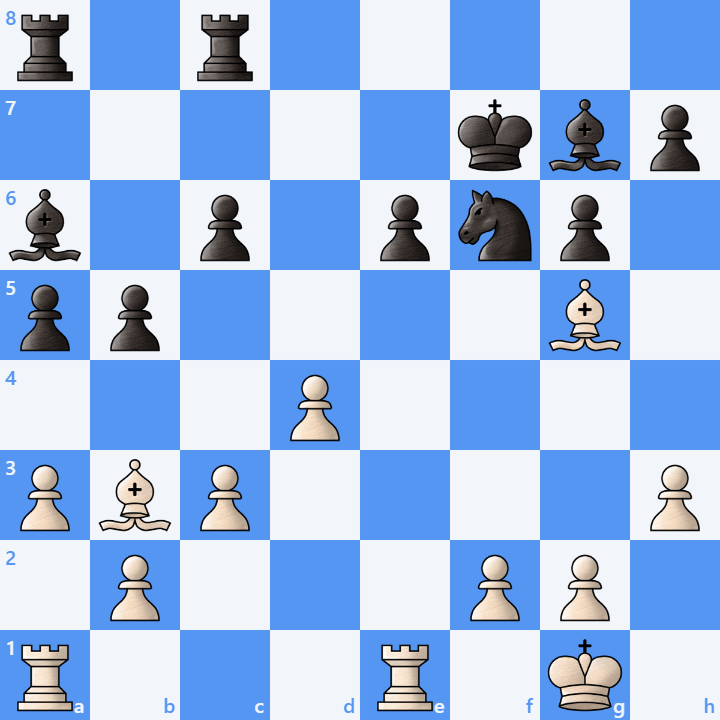
Find the best line in the footnote2, and the full explanation in the video.
On my shelf this week:
Thinking Sideways: How to Think Like a Chess Player and Win at Life (UK edition available now, USA edition pre-order)
You can also find and share these videos on YouTube.
It’s natural to tunnel on 1. Bxe6+, winning another pawn and the exchange, with an interesting endgame imbalance. 1. Rxe6!!, however, wins immediately. See video for all the analysis.


